Arusha, Tanzania · Licensed Tour Operator

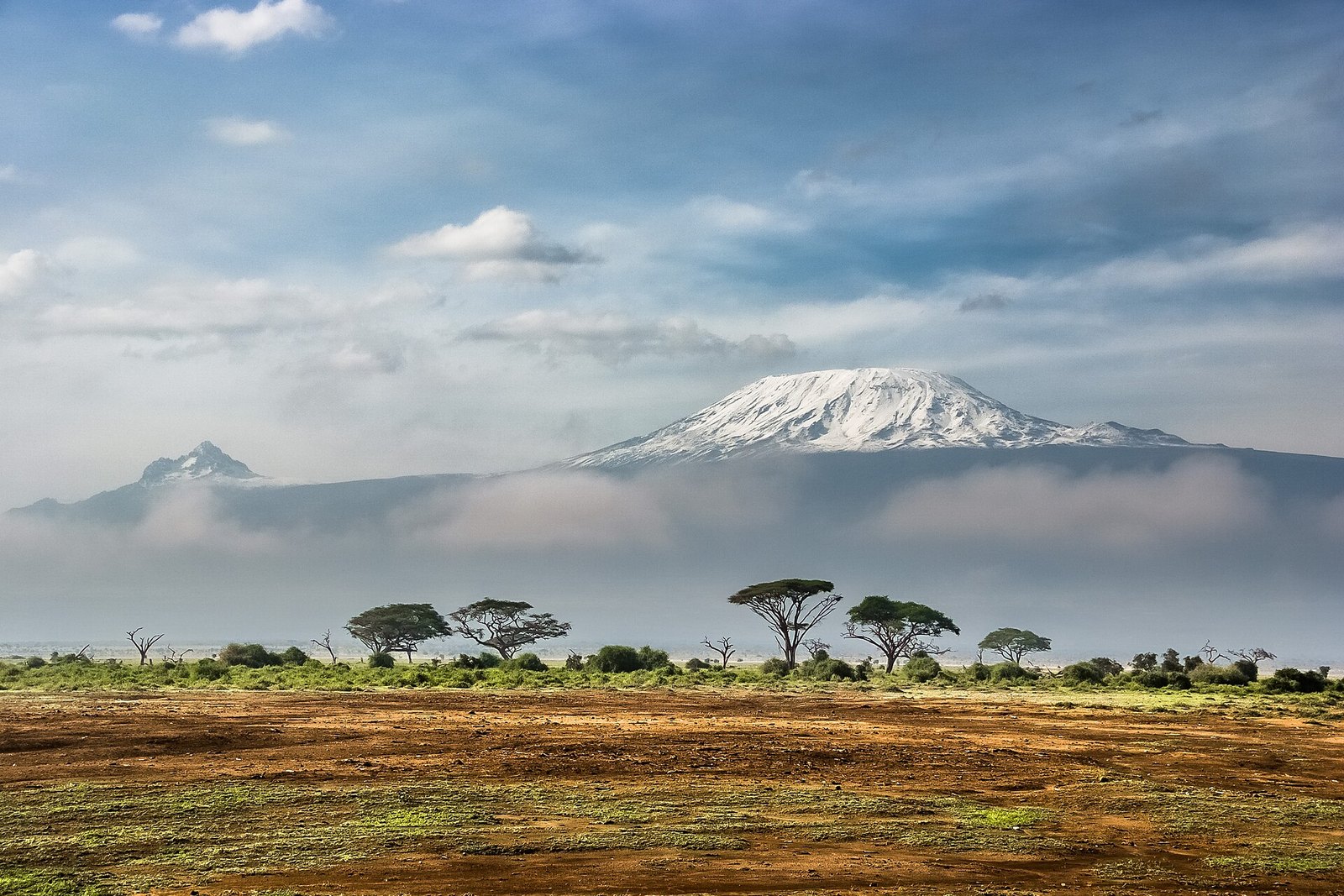
Mountains
Kilimanjaro & Mount Meru Treks
Choose the route that fits your time and fitness. Our mountain crews walk these paths all year and know exactly how to get you to the summit safely.
Count your days
More days on the mountain means a far better chance of the summit. If you can spare eight, climb eight.
Tent or hut
Marangu sleeps in dormitory huts. Every other route camps in tents, with porters carrying the camp.
Scenery or quiet
Machame and Lemosho are the beautiful ones. Rongai is the quiet, dry alternative near Kenya.
Four ways up
Kilimanjaro routes
The same mountain, four very different weeks. All of them are climbed with our own guides, our own cooks and our own porters — and every one of them ends at Uhuru Peak.
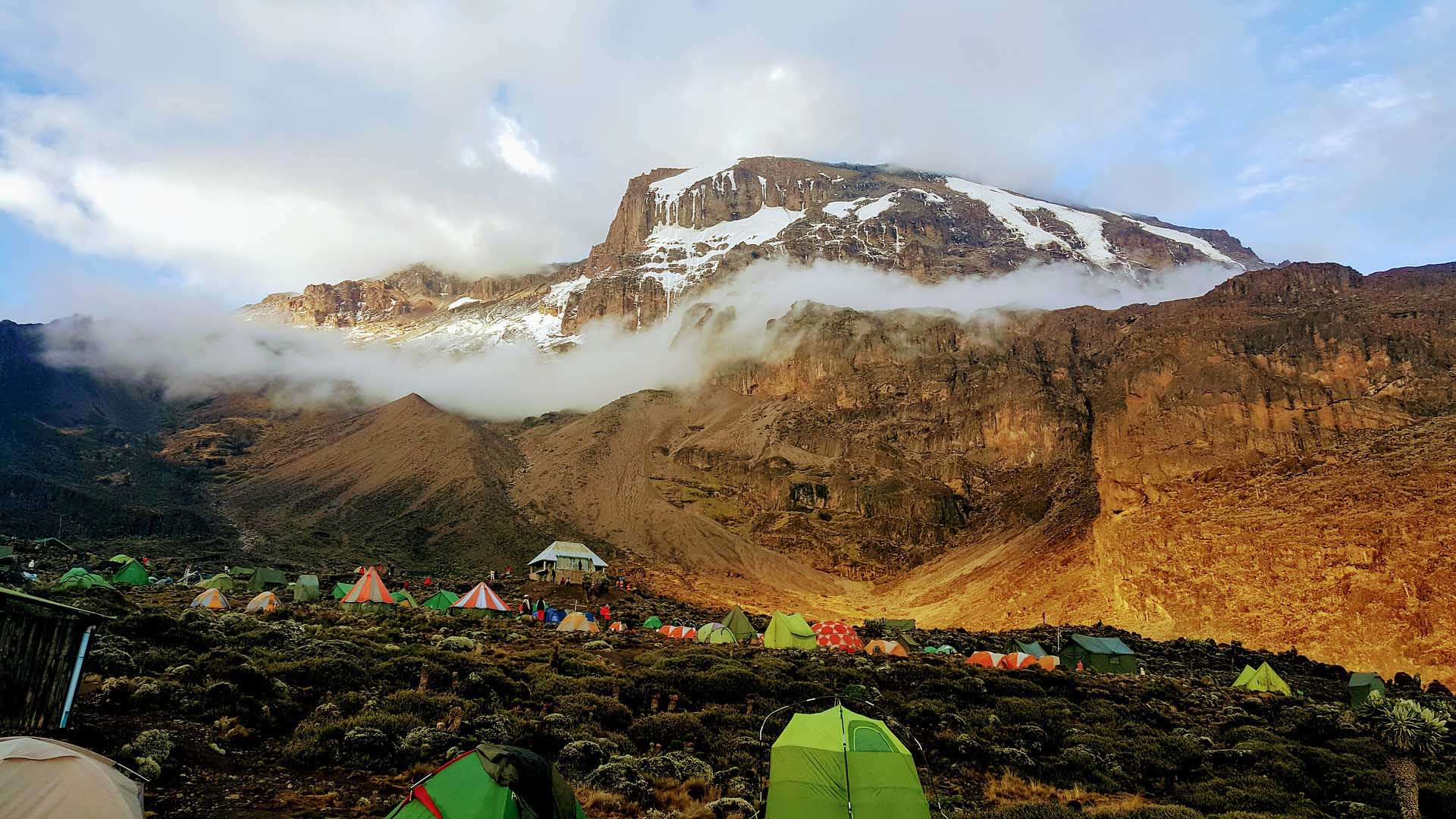 7 daysChallenging
Kilimanjaro — Machame Route
A beautiful, varied climb up the 'Whiskey Route' with good acclimatisation and a strong summit success rate.
Best for: First-timers who want the classic Kilimanjaro climb
Summit: Uhuru Peak, 5,895 m
Sleeping: Camped in tents
Through: Rainforest, moorland, Barranco Wall, alpine desert
Best time: January–March and June–October
- Barranco Wall scramble
- Excellent acclimatisation profile
- Varied scenery every day
- Uhuru Peak sunrise
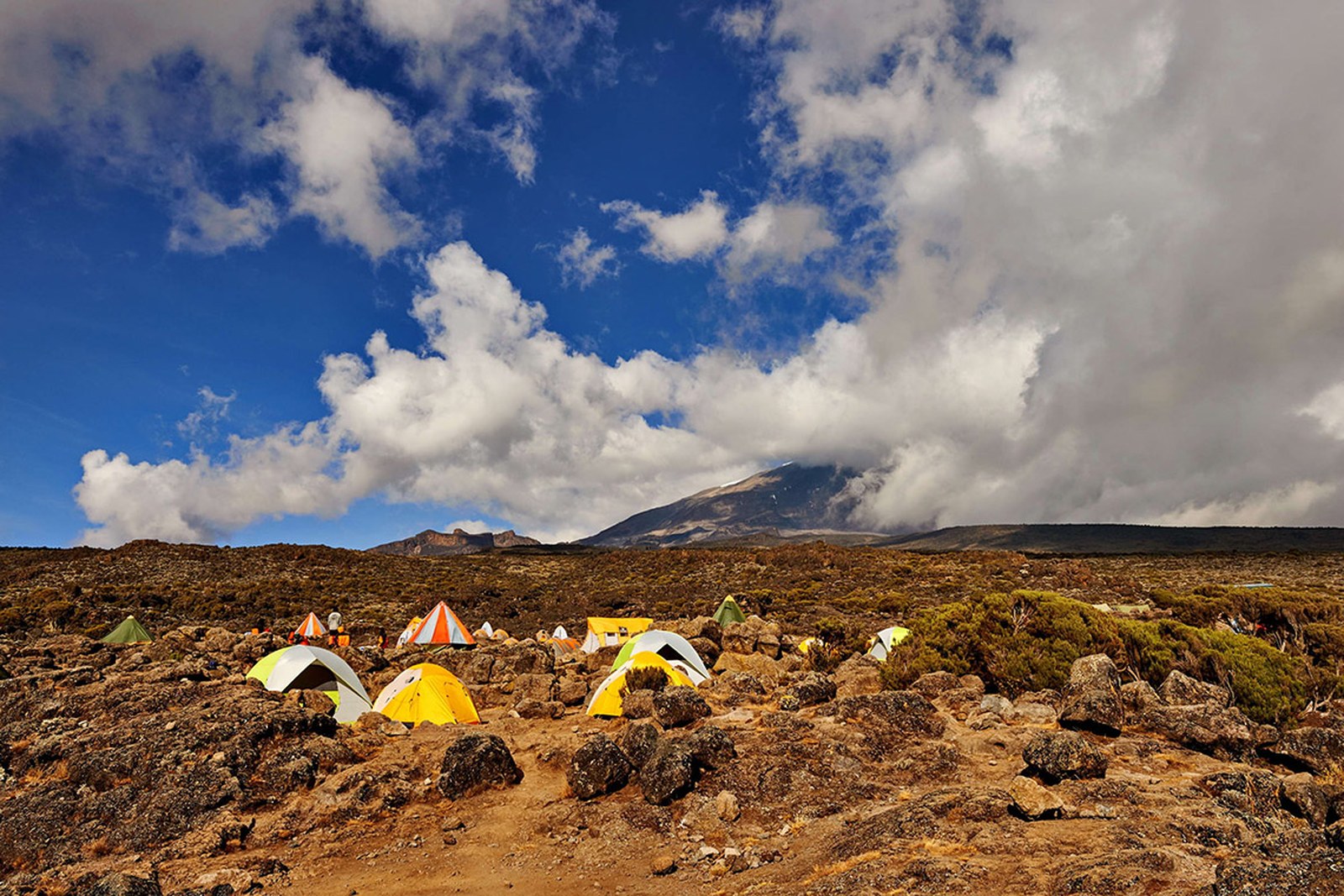 8 daysModerate
Kilimanjaro — Lemosho Route
Our most relaxed and successful approach — quiet western trails, gradual altitude gain and time to enjoy the mountain.
Best for: The best chance of the summit, if you have the extra day
Summit: Uhuru Peak, 5,895 m
Sleeping: Camped in tents
Through: Western rainforest, Shira Plateau, then the high camps
Best time: January–March and June–October
- Highest summit success rate
- Quiet western approach
- Shira Plateau crossing
- Eight days on the mountain
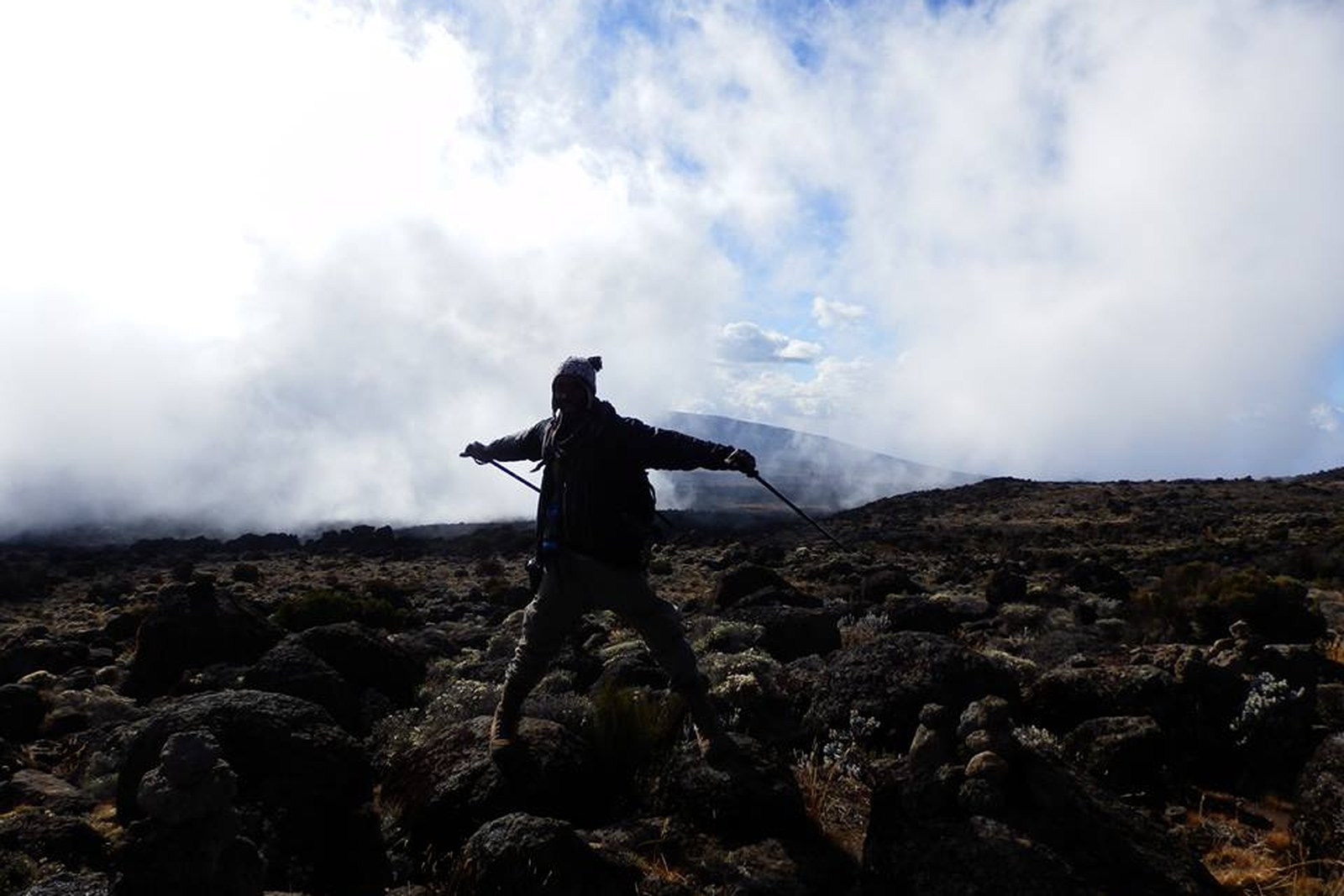 6 daysChallenging
Kilimanjaro — Marangu Route
The classic hut-to-hut route, popular and comfortable, ideal if you prefer a bed and a shorter trip.
Best for: Treckers who would rather sleep in a hut than a tent
Summit: Uhuru Peak, 5,895 m
Sleeping: Mountain huts with beds
Through: Forest and open moorland, gentle gradients
Best time: January–March and June–October
- Sleep in mountain huts
- Shortest itinerary
- Gentle gradients
- Mawenzi views
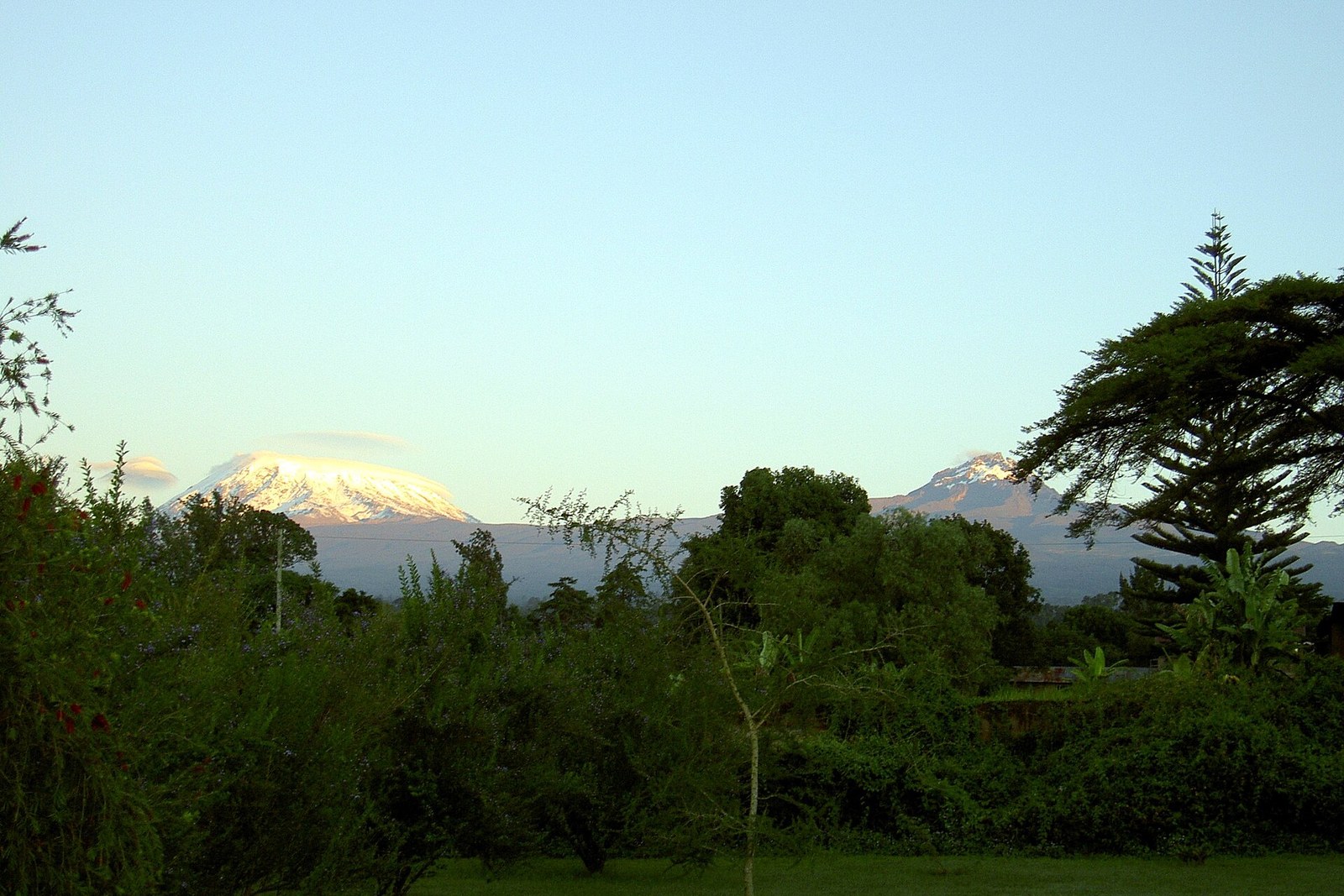 7 daysChallenging
Kilimanjaro — Rongai Route
Approach from the drier northern side near Kenya — a wilder, less busy way to the Roof of Africa.
Best for: Quiet trails and climbing in the wetter months
Summit: Uhuru Peak, 5,895 m
Sleeping: Camped in tents
Through: Dry northern moorland, Mawenzi Tarn, the high desert
Best time: Year-round, especially the wetter months
- Least crowded route
- Drier northern slopes
- Mawenzi Tarn camp
- Good for rainy shoulder months
Smaller mountains
Other peaks worth climbing
Shorter, sharper and far less busy. Many of our guests use them as a warm-up, and some come only for these.
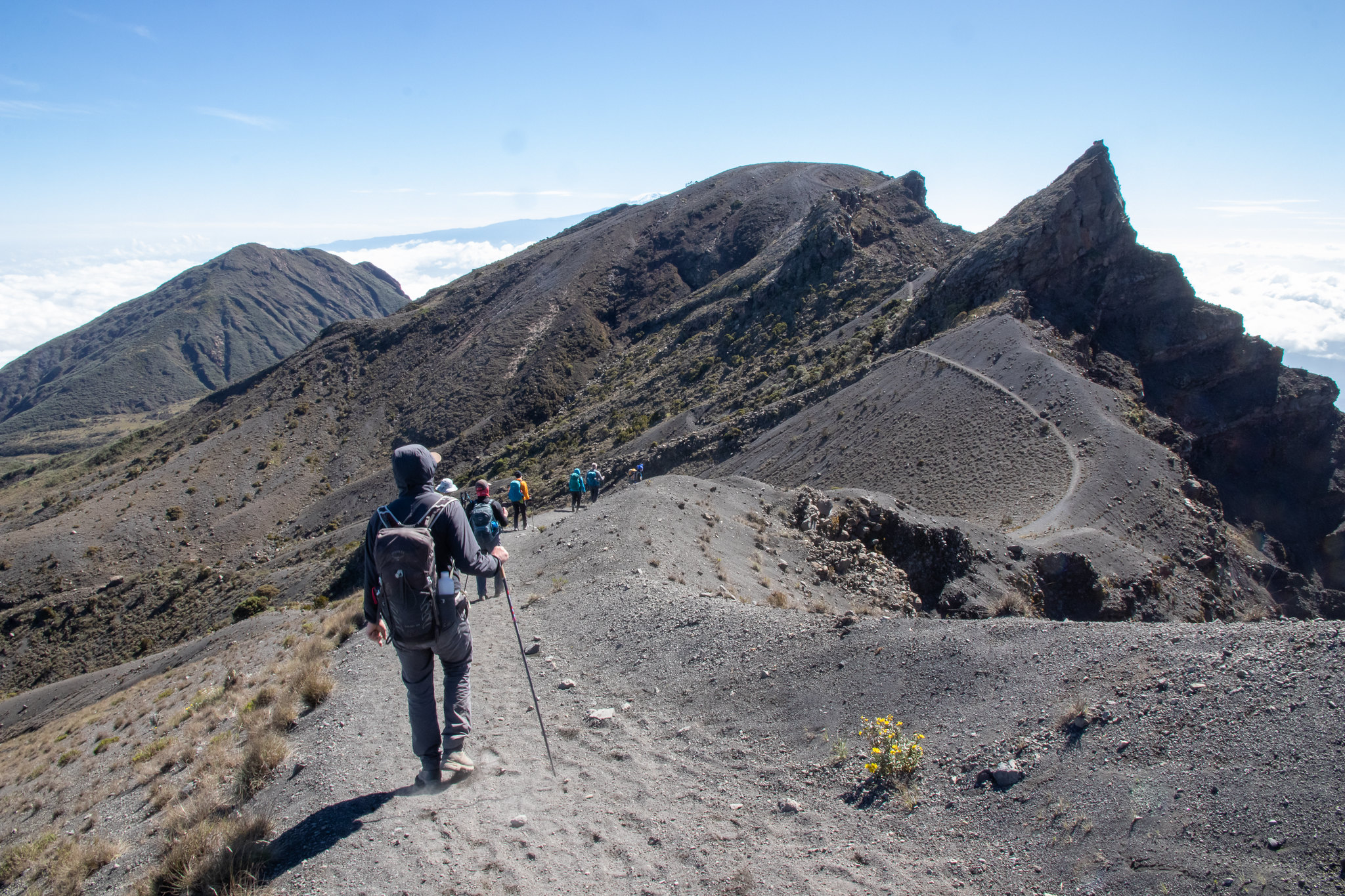 4 daysModerate
Mount Meru
A spectacular warm-up climb with a dramatic ridge walk and a great chance to spot wildlife on the lower slopes.
Best for: A shorter mountain or a warm-up before Kilimanjaro
Summit: Ghost Peak, 4,566 m
Sleeping: Mountain bunkhouses
Through: Arusha National Park plains, forest, crater ridge
Best time: June–February
- Wildlife on the lower slopes
- Dramatic crater ridge walk
- Kilimanjaro views at sunrise
- Great acclimatisation climb
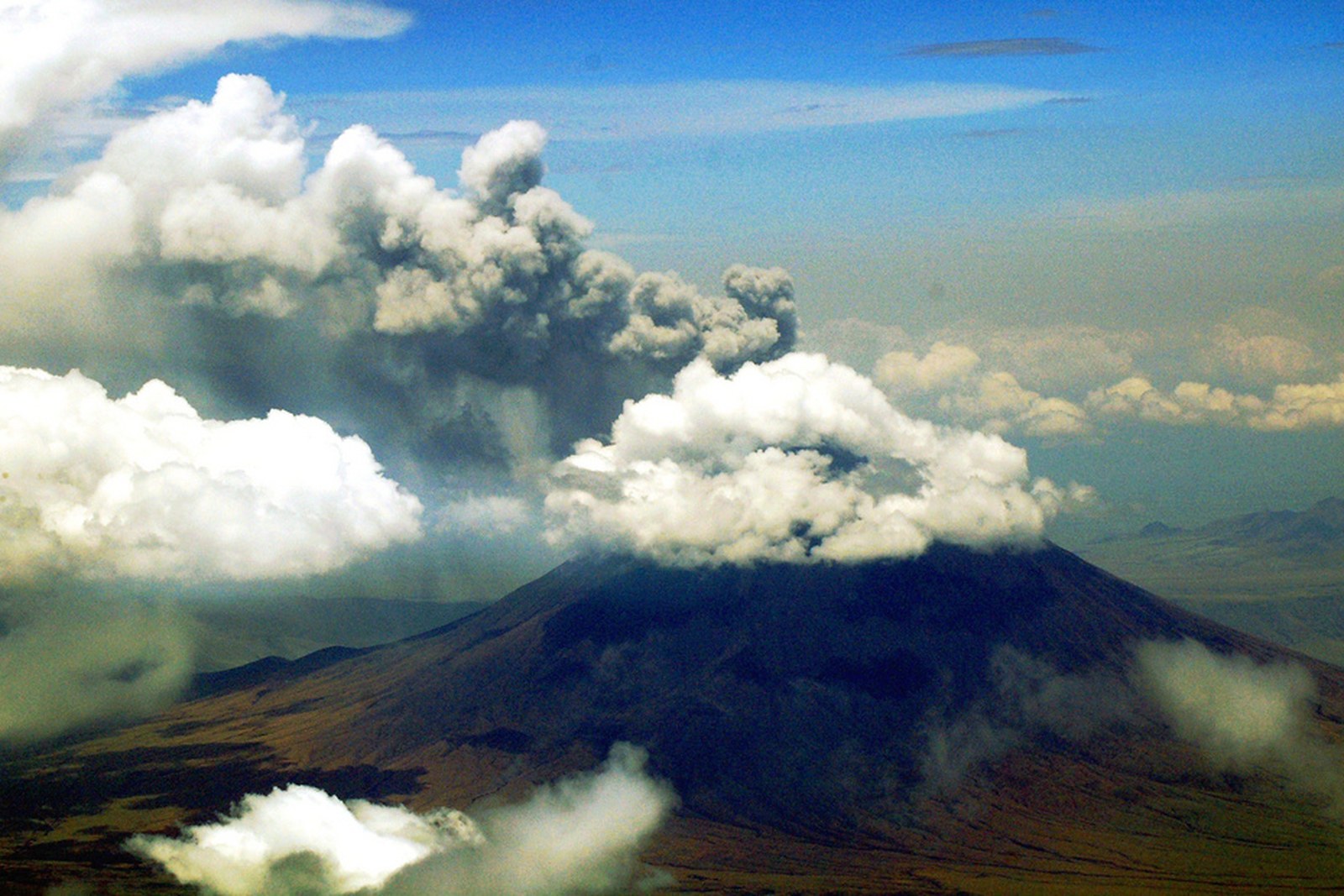 2 daysVery challenging
Ol Doinyo Lengai
A tough but rewarding night climb of the Maasai 'Mountain of God', with sunrise over the Rift Valley.
Best for: Adventurous walkers with a night in the volcano
Summit: Crater rim, 2,962 m
Sleeping: Camp at the mountain's foot
Through: Ash slopes, steaming volcano, Rift Valley and Lake Natron
Best time: June–October
- Active volcano crater
- Midnight start, sunrise summit
- Lake Natron flamingos
- Rift Valley panorama
Side by side
Compare the routes
A quick look at what each climb asks of you. Tap any row to read the full route page.
| Route | Days | Difficulty | Summit | Sleeping | Best time | Price |
|---|---|---|---|---|---|---|
| Kilimanjaro — Machame Route | 7 days | Challenging | Uhuru Peak, 5,895 m | Camped in tents | January–March and June–October | Price on Request |
| Kilimanjaro — Lemosho Route | 8 days | Moderate | Uhuru Peak, 5,895 m | Camped in tents | January–March and June–October | Price on Request |
| Kilimanjaro — Marangu Route | 6 days | Challenging | Uhuru Peak, 5,895 m | Mountain huts with beds | January–March and June–October | Price on Request |
| Kilimanjaro — Rongai Route | 7 days | Challenging | Uhuru Peak, 5,895 m | Camped in tents | Year-round, especially the wetter months | Price on Request |
| Mount Meru | 4 days | Moderate | Ghost Peak, 4,566 m | Mountain bunkhouses | June–February | Price on Request |
| Ol Doinyo Lengai | 2 days | Very challenging | Crater rim, 2,962 m | Camp at the mountain's foot | June–October | Price on Request |
Good to know
Questions we are asked before a climb
Honest answers from people who have been up there many times.
How fit do I need to be to climb Kilimanjaro?
You need steady patience more than speed. If you can walk five or six hours with a daypack, comfortable on your feet and happy in the cold, you are in range. The mountain is fought at walking pace, and a good guide will slow the whole group down on purpose.
Which route has the best chance of the summit?
The longer you are on the mountain, the better. Lemosho over eight days gives the smoothest acclimatisation, with Machame close behind. Marangu is shorter and sleeps in huts, but its profile is tougher on the body than people expect.
When should I book a climb?
January to March and June to October are the driest and most popular windows. The shoulder months climb well on the northern Rongai side, which catches less rain. Weekends and the school holidays fill fast, so we suggest planning four to six months ahead.
What is actually included in a climb?
Park and rescue fees, your guide and assistant guides, cooks and porters, tents and meals on the mountain, clean drinking water, transfers from Arusha or Moshi, and our help with gear lists and insurance advice. International flights, visas, tips and personal gear are not included.
Not sure which route fits you?
Tell us your dates, how many nights you have and what you normally walk, and we will tell you straight which mountain and which route will give you the best trip.
Or email info@talonafricasafaris.com · +255 744 266 114